Project spotlight

Search and recovery drones for the Marine Patrol.

An aerial drone and an underwater drone for MIPD’s Marine Patrol. Both would help officers find people faster on Lake Washington, on the surface and in the deep water below it. This goal would give the Marine Patrol its first drones, for work its officers already do.

What it is

Two tools for one job

MIPD’s Marine Patrol covers the waters of Mercer Island, Bellevue, Renton, Medina, Hunts Point, and Yarrow Point. Its officers answer boating accidents, swimmers in trouble, and people missing on the water. When someone goes under, the first minutes matter most, and the lake is deep and dark below the surface. These two drones give the patrol eyes in both places.

Above the water

An aerial drone with a thermal camera

Launched from the patrol boat or the shore, it searches a wide area in minutes and sees body heat in the dark, in rain, and in glare off the water. It can drop a flotation device that inflates on contact, so a person in trouble has something to hold while the boat closes the distance. It also helps officers check shorelines and docks when a child or an older adult is reported missing near the water.
Below the water

An underwater drone with a grabber arm

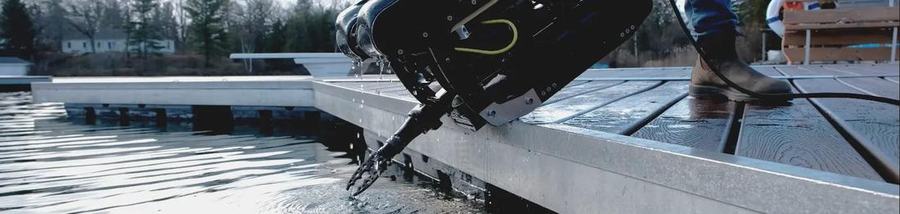
A remotely operated vehicle, or ROV, goes down on a cable while the officer stays safely in the boat. Its camera and lights show the bottom at depths where divers face serious risk, and its grabber arm can secure a person so they can be brought to the surface.

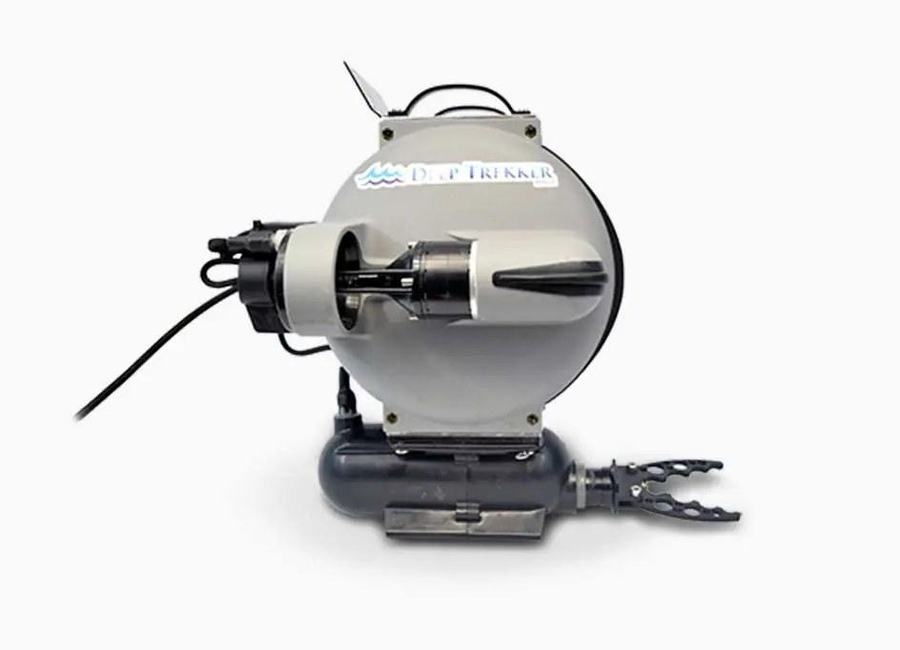
A compact underwater drone with a grabber arm being lowered into a lake from a dock
A compact underwater drone is small enough for one officer to lower from a dock or the patrol boat. Photo courtesy of Deep Trekker, shown as an example. MIPD will choose the model.
Lake Washington depths compared with diving limits Lake Washington 108 ft Average depth of the lake 130 ft Usual limit for recreational diving 150 ft Deep water near I-90 150 to 200 ft Water under the I-90 bridge 214 ft Deepest point in the lake
Depths from the Washington Department of Ecology and the University of Washington. Not to scale horizontally.

The challenge

Lake Washington is deeper than most people realize.

The lake averages about 108 feet deep and reaches 214 feet at its deepest point. Under the I-90 floating bridges, the water runs about 150 to 200 feet deep.

Recreational diving usually stops at about 130 feet. Deeper than that, divers need technical training, special gas mixtures, and long decompression stops on the way up. At the bottom of Lake Washington, the water is cold, visibility is close to zero, and the bridge’s anchor cables add another hazard.

In a recent search near the I-90 bridge, partner agencies flew thermal drones over the water, and the deep-water work relied on side-scan sonar and an underwater drone brought in from outside the department. With its own equipment, the Marine Patrol could begin that work on the first day.

Depth map of central Lake Washington around Mercer Island and the I-90 floating bridges SEATTLE MERCER ISLAND BELLEVUE I-90 floating bridges Deepest water, about 210 ft N 0 1 mile
Under 50 ft 50 to 100 ft 100 to 150 ft 150 to 200 ft Over 200 ft
Depths interpolated from NOAA Chart 18447 soundings. For illustration only, not for navigation.

The deep water is west of the Island.

The map shows the middle of the lake. The deepest channel runs west of Mercer Island, under and just north of the I-90 floating bridges, where the bottom drops past 200 feet. The East Channel, between Mercer Island and Bellevue, is far shallower, mostly under 70 feet. Marine Patrol officers say many of their boating calls come from the west side of the lake, near the bridges.

An underwater drone rated past 214 feet can reach every part of this map. In the deep water west of the Island, it works where a recreational diver cannot. In the East Channel and along the shore, it still matters: it can search at night, stay down longer than a diver, and run a search pattern the Marine Patrol can review later.

The aerial drone helps anywhere on the surface, deep or shallow. It can find a person quickly, drop a flotation device while the boat is still closing in, and guide the Marine Patrol boat straight to them.

On the water

How it would serve the Island

Each of these is work the Marine Patrol already does. The drones help officers do it faster and with less risk.

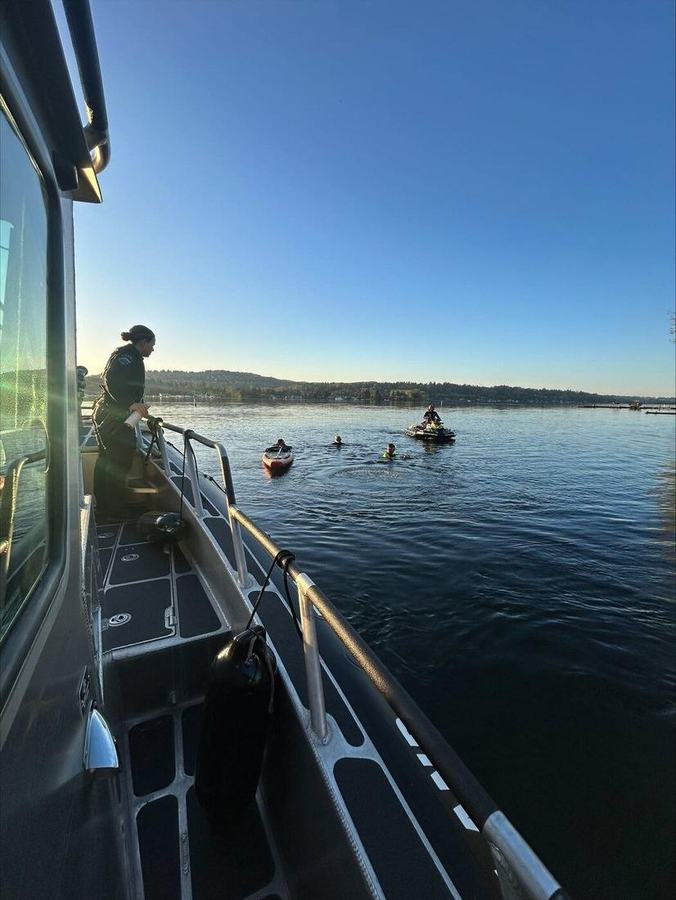
MIPD marine officer watching swimmers from the patrol boat

The first minutes

A person who falls from a boat or tires while swimming may have only minutes. An aerial drone can be over the scene before the boat arrives, find the person by body heat, and drop a flotation device that holds them up until officers reach them.

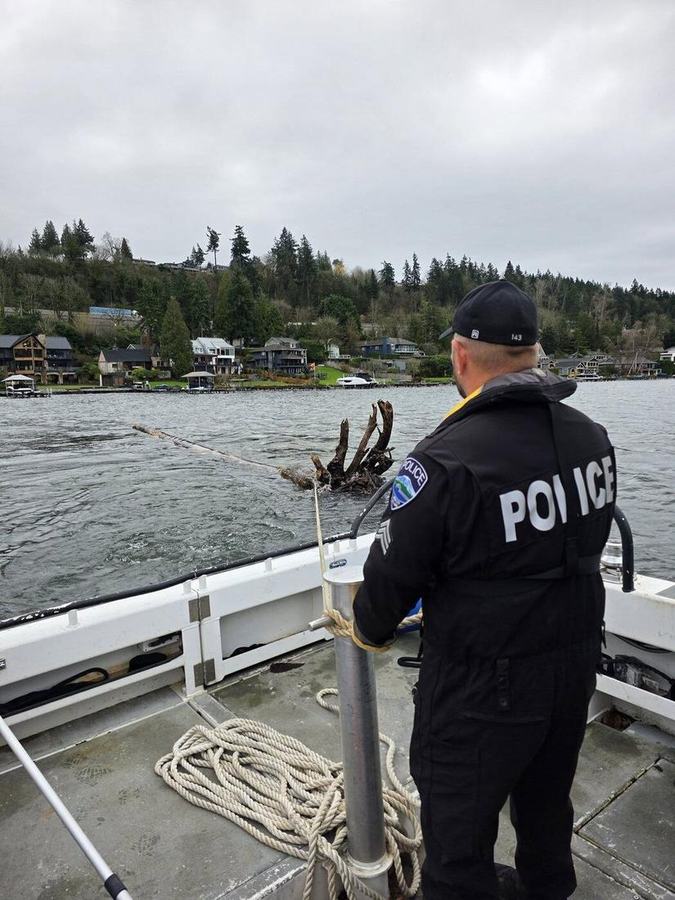
MIPD marine officer hauling a line aboard the patrol boat

Below the dive limit

When a search moves to the bottom, the underwater drone goes first. It can work at any depth in the lake, for as long as its battery lasts, without putting a diver at risk. Divers still go in when it is safe, with the drone showing them exactly where to go.

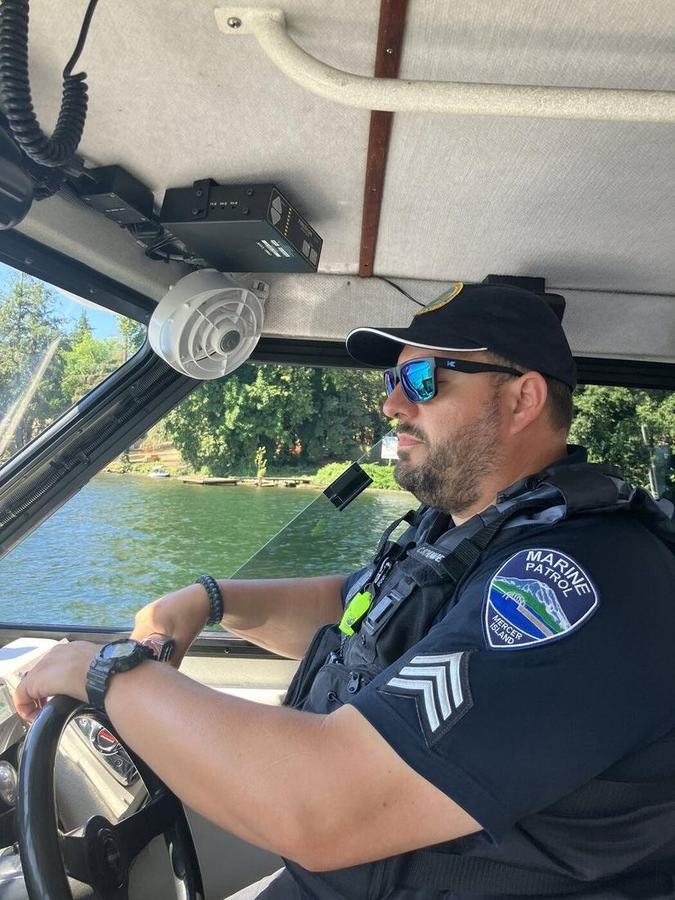
MIPD Marine Patrol sergeant at the helm of the patrol boat

Bringing someone home

Sometimes the work ends in a recovery. For a family, every day of waiting is hard. Having the equipment on the boat, instead of waiting for outside help, can shorten a search from weeks to days or hours.

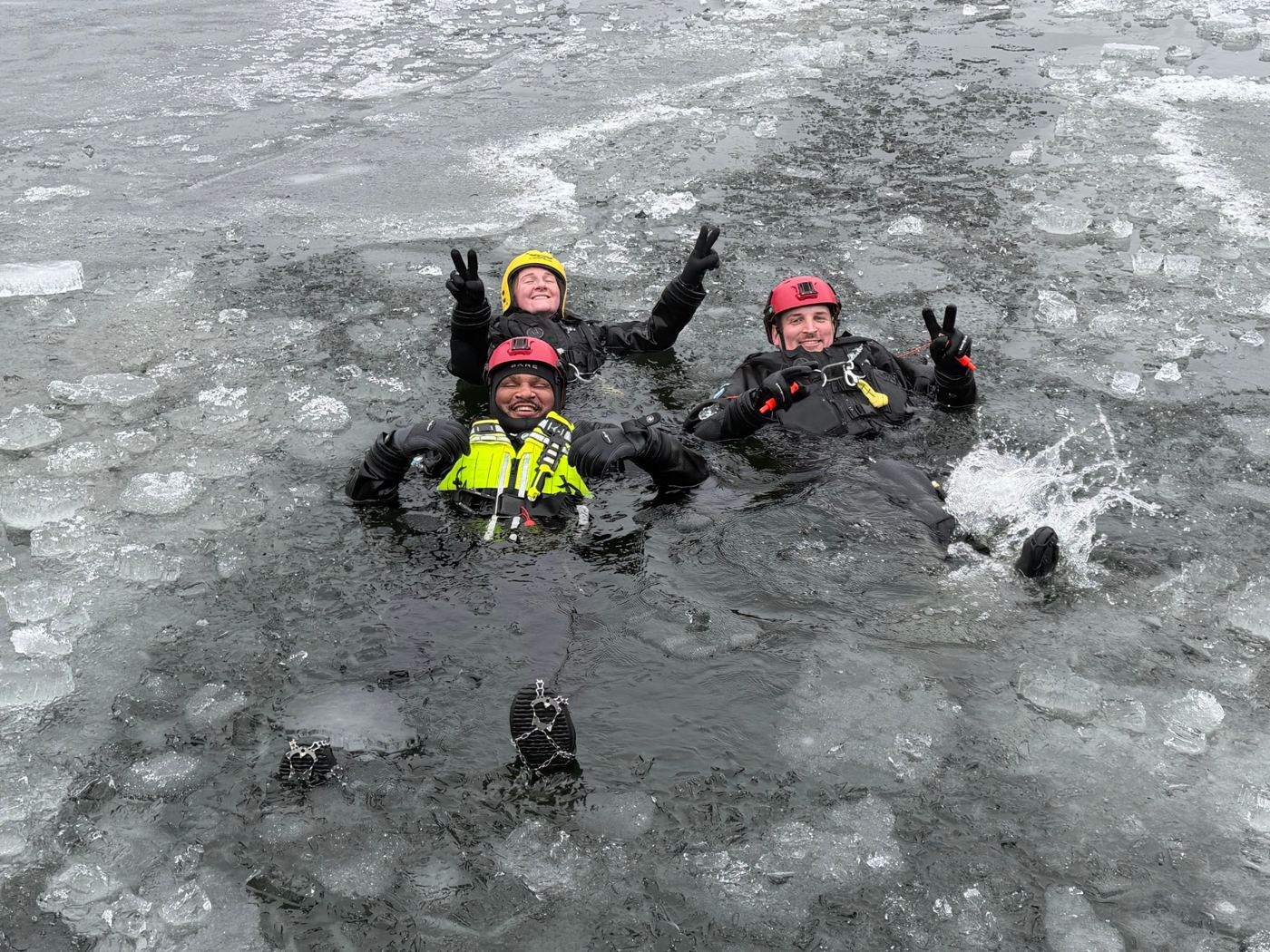
MIPD marine team members in dry suits and helmets floating in icy water during rescue training, smiling and flashing peace signs
Water rescue training

Photographs show the MIPD Marine Patrol at work.

Limits

What we are not promising

These drones are for search, rescue, recovery, and water safety. The chapter is not funding drones for routine patrol or for watching residents, and neither drone will carry anything other than cameras, lights, a grabber arm, and a flotation device. MIPD sets the rules for when and how the drones are used, and the chapter will ask that those rules be shared with the public. Every flight and dive follows MIPD policy and FAA rules. Chapter gifts buy equipment and training. They do not pay for positions, overtime, or upkeep beyond the first kit, and the chapter will report back on what was bought. A drone does not replace an officer or a diver. It helps them get to the right place sooner and more safely.

Already working nearby

Other departments already do this

Pierce County

The Pierce County Sheriff’s Office uses an underwater drone with video, sonar, and a robotic arm to find people in water deeper than 100 feet, and it can be in the water in about five minutes. In 2023, its Metro Dive Team, which serves Pierce County, Tacoma, and Lakewood, received federal funding to replace a 20-year-old ROV with a new one that has a grabber and sonar.

Eastside neighbors

Bellevue runs a Drone as First Responder program for police and fire calls and lists search and rescue among its drone uses. During a recent search near the I-90 bridge, the Clyde Hill Police drone unit helped MIPD search the water.

Lakes like ours

At Lake Tahoe, a local resident donated an underwater drone to the Douglas County Sheriff’s Office, and marine deputies used it to help recover a drowning victim. In Wisconsin, La Crosse Police drones now drop flotation devices to people in trouble on the river.

Making gifts go further

How grants could help.

A full search and recovery setup, with an underwater drone, sonar, and a thermal aerial drone, can cost $100,000 or more. Many public-safety grants require the department to put up part of the cost, often about 25 percent, before the grant pays the rest. If MIPD pursues one of these grants, chapter gifts can serve as that local share.

State boating funds

Washington State Parks passes federal boating safety money to police and sheriff’s marine units with approved programs. Agencies that receive it typically pay a 25 percent match.

Federal public-safety grants

Federal programs such as the Byrne Justice Assistance Grant help local departments buy equipment. Pierce County’s new underwater drone, described above, was paid for with federal funding secured for the Metro Dive Team.

Private foundations

Some foundations fund water rescue directly. In Nevada, a private foundation paid for the Washoe County Sheriff’s Office’s side-scan sonar and its first underwater drone.

Grants are competitive. MIPD would decide which grants to pursue and would apply for them. The chapter’s role is to have the local share ready, so the department can move when an opportunity opens.

Facts from the City of Mercer Island, the Washington Department of Ecology, the University of Washington, the Pierce County Sheriff’s Office, the City of Bellevue, Placer County, and news reports.

← Back to What We Fund